


Overview
Hamamatsu's first Marriott-branded hotel occupies the renovated former Grand Hotel Hamamatsu in western Central Hamamatsu. Its dining, meeting facilities, and 236 rooms and suites support more than a quick rail overnight, though the Tokaido Shinkansen is a short local transfer away rather than directly outside the door.
Several dining venues, extensive event space, a fitness center, and M Club allow much of a business trip or conference to stay under one roof. Travelers concerned mainly with catching an early train will find station-front hotels closer.
Rooms
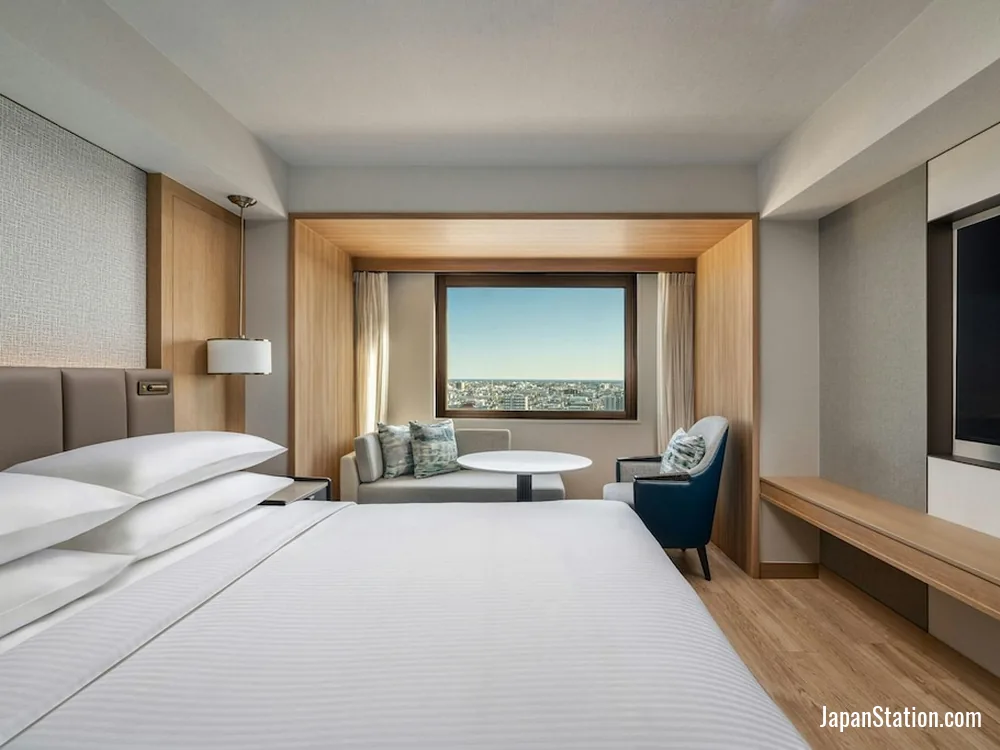
All 236 rooms and suites were renovated for the conversion to Marriott. Their interiors reference Hamamatsu's textile and music industries, with colors inspired by Lake Hamana and the Enshu coast.
Work desks and high-speed internet support time spent working in the room. Suites and lounge-access categories provide additional options for longer stays or trips involving meetings at the hotel.
Facilities
Meeting space is a defining feature. The hotel's 13 function rooms total 4,053 square meters and can accommodate conferences and large social events.
Guests also have access to a fitness center. M Club serves breakfast, evening food, and drinks to those with an eligible room booking or qualifying Marriott Bonvoy status, while on-site parking is available for a daily fee.
Dining
Rochester serves breakfast and all-day meals. Two Japanese restaurants cover shabu-shabu, teppanyaki, and kaiseki, while the Great Room brings together a lounge, bar, and patisserie.
The range is especially helpful on meeting days, when breakfast, dinner, and evening drinks can remain in the same building. Room service is also available.
Location and transport
The hotel is west of Hamamatsu Station, which serves the Tokaido Shinkansen and JR Tokaido Main Line. Shin-Hamamatsu Station is a separate nearby stop on the Enshu Railway.
Neither station is directly connected to the hotel. A taxi or local bus is the more comfortable final step with bags, and travelers catching an early Shinkansen should allow time for the connection. The distance matters most with luggage.
Airport access
The hotel doesn't provide an airport shuttle. From Chubu Centrair International Airport, travelers can take Meitetsu rail to Nagoya and continue by Shinkansen, or use the Entetsu airport bus to Hamamatsu Station.
From Mount Fuji Shizuoka Airport, the public transport route uses an airport bus to Shimada Station, followed by the JR Tokaido Main Line to Hamamatsu. Both journeys still require a final connection from Hamamatsu Station to the hotel.
Why stay here
Extensive meeting facilities, several dining choices, lounge access for eligible guests, and a fitness center make event trips and longer business stays easier to manage along the Tokaido Shinkansen corridor. The tradeoff is the local connection between the hotel and Hamamatsu Station.
Hamamatsu Castle reflects the city's history with Tokugawa Ieyasu, while the Hamamatsu Museum of Musical Instruments draws on its long association with instrument manufacturing. Lake Hamana and Kanzanji require a separate outing by bus or car rather than a walk from the hotel.
Good to know
M Club isn't included with every room, so book an eligible category or check your Marriott Bonvoy status. Breakfast at Rochester carries an additional fee, on-site parking costs JPY 1,000 per day, and there is no airport shuttle.


