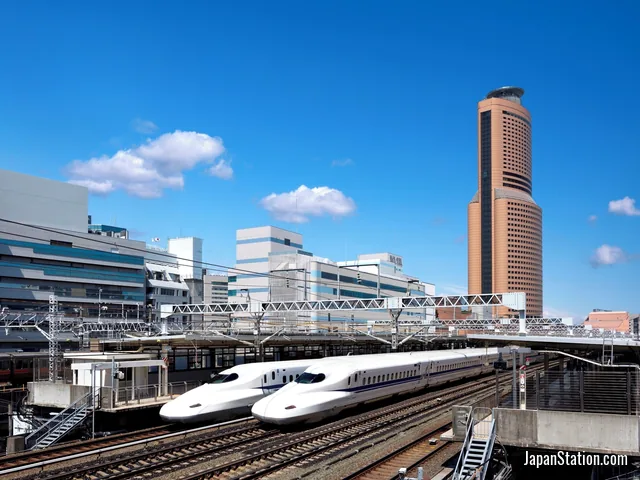
Overview
Hamamatsu Station brings Shinkansen travelers directly into downtown. That makes it a convenient base in Central Hamamatsu, particularly for a short stay or an itinerary built around rail travel.
Long-distance JR services, local trains, and buses meet here, while the Enshu Railway begins nearby at Shin-Hamamatsu. The combination suits a compact visit centered on museums and events. Lake Hamana and other outlying parts of Hamamatsu require a separate onward journey.
Lines and connections
JR Central serves Hamamatsu with the Tokaido Shinkansen and the Tokaido Main Line. The Shinkansen provides intercity connections, while the conventional line handles shorter rail trips along the corridor. Local and highway buses also call at the station area.
Shin-Hamamatsu is a separate station about a five-minute walk from JR Hamamatsu's North Exit. Use it for the Enshu Railway, not as another set of JR platforms. Checking the operator before following signs can save an unnecessary detour.
Station area
The North Exit faces the bus terminal and the main downtown blocks. May One adds shopping and places to eat at the station. Act City Hamamatsu is about a five- to six-minute walk away, with halls and event spaces close to the tracks.
Okura Act City Hotel Hamamatsu occupies the adjoining tower and connects to the station side of the district by a short passage. Other central hotels are spread beyond the immediate concourse, so it helps to check the actual walking route when traveling with bags.
What's nearby
The Hamamatsu Museum of Musical Instruments is about ten minutes from JR Hamamatsu on foot. Its collection features instruments from around the world, offering a worthwhile cultural stop during a short stay without requiring a bus or taxi. Act City's concert and event facilities are closer still.
Hamamatsu Castle and Lake Hamana are beyond the immediate station area. Treat Hamamatsu Station as the departure point for those visits rather than assuming they belong to the downtown walking circuit.
Good to know
Use the North Exit for the bus terminal, central shopping streets, and the walk to Shin-Hamamatsu. The Shinkansen platforms are closer to the South Exit, so agree on an exit when meeting someone at the station.