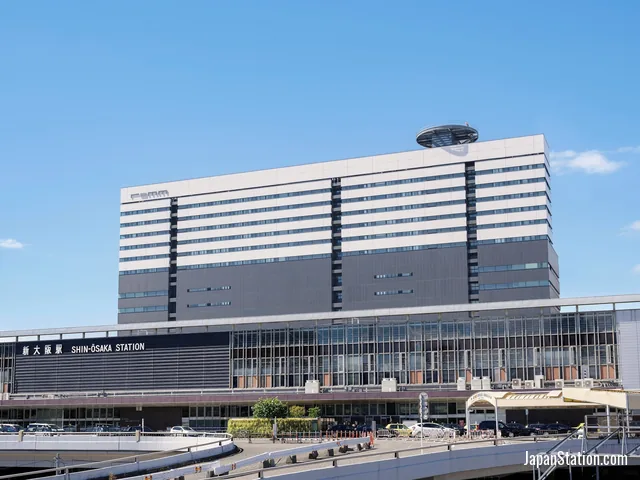
For long-distance rail trips through Osaka, Shin-Osaka is often the first or last stop. Four kilometres north of Osaka Station and Umeda, it brings together the Tokaido and Sanyo Shinkansen, local JR trains, and the Osaka Metro Midosuji Line.
Central Osaka lies farther south. A nearby hotel avoids another city crossing before an early train or after a late arrival. For department stores, nightlife, and a broader restaurant scene outside the door, Osaka Station / Umeda or Namba will put you closer.
Lines and connections
Eastbound Tokaido Shinkansen trains run via Kyoto and Nagoya to Tokyo. Westbound Sanyo services continue through Okayama and Hiroshima toward Hakata, so many cross-country rail journeys involve a change or pause at Shin-Osaka.
Conventional JR trains cover the short trip to Osaka Station and also run toward Kyoto. Osaka Metro's Midosuji Line, numbered M13 here, travels directly through Umeda and Namba. It's often the simplest route from the Shinkansen to hotels and neighborhoods along Osaka's main north-south corridor.
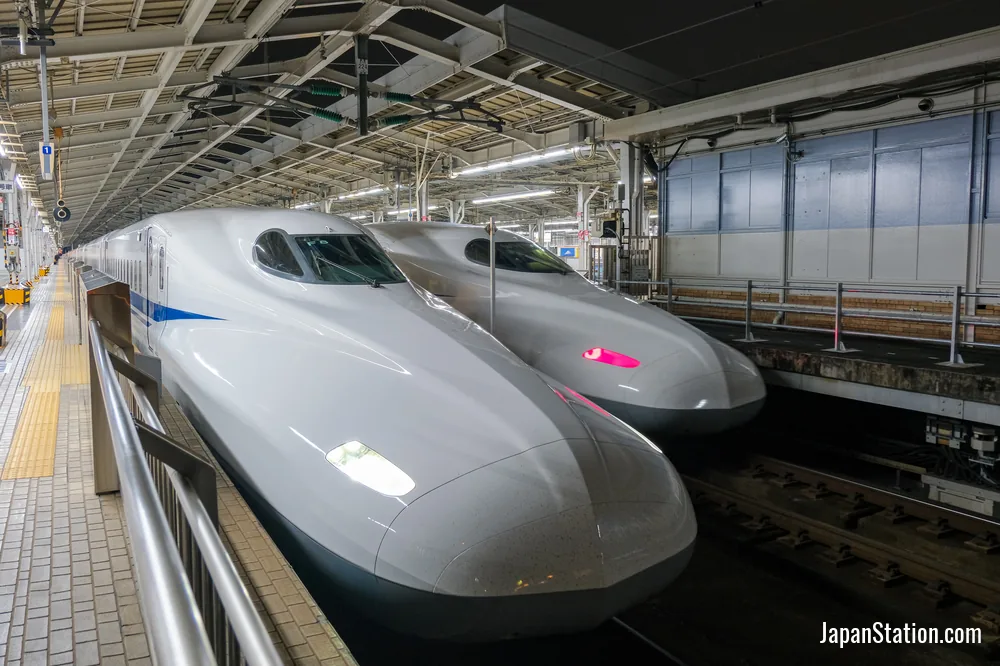
Shinkansen trains at Shin-Osaka Station. Photo by Gengorou/pixta.
Shin-Osaka Station Hotels
Airport access
The JR Haruka runs directly between Kansai International Airport and Shin-Osaka in about 50 minutes. That connection is especially helpful when a flight and Shinkansen journey fall on the same day.
Airport buses link Osaka Itami Airport with Shin-Osaka in about 25 minutes. Road conditions can affect the journey, so leave some margin before a timed departure.
Station area
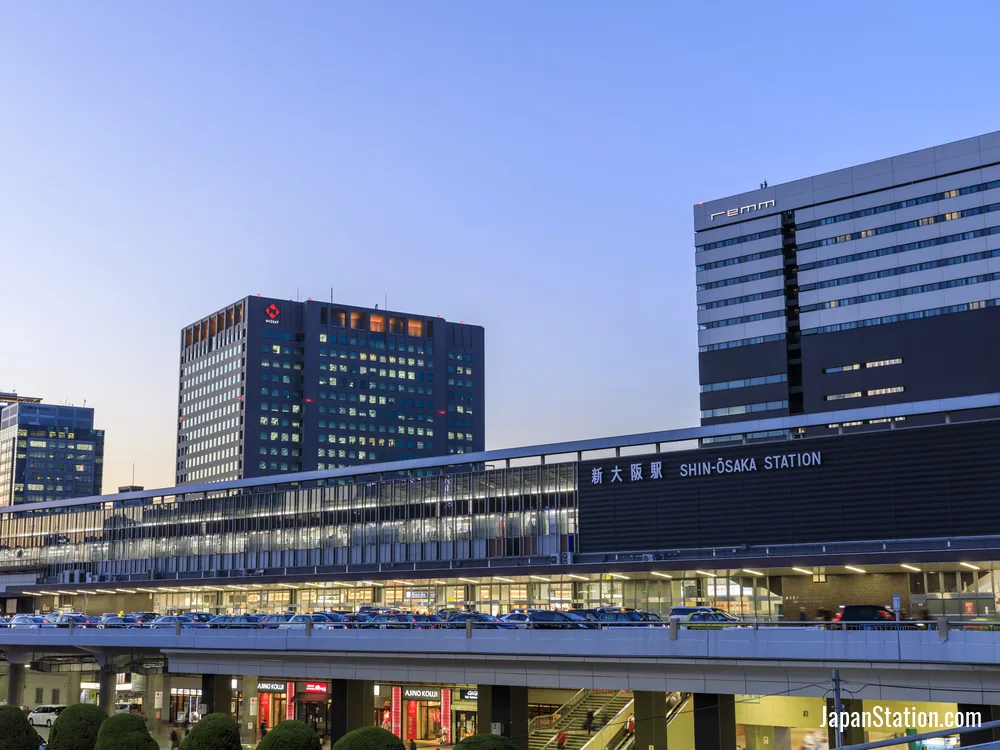
The Shin-Osaka Station Area is shaped by hotels, offices, and transport rather than sightseeing. Food and souvenir shops inside the rail complex cover everyday needs, while lockers and baggage rooms help when a transfer doesn't align with hotel check-in.
Several hotels are close to the gates. remm Shin-Osaka connects directly to the Shinkansen Central Ticket Gate, while other options are spread across the JR and Metro sides. Check the route from your arrival gate before setting out.
Good to know
A Shinkansen ticket marked Shin-Osaka doesn't take you to Umeda. Continue by local JR train to Osaka Station, or take the Midosuji Line south into central Osaka.
The rail complex spans several levels, with JR, Shinkansen, Metro, and airport-bus directions beginning at different gates or exits. If you're carrying luggage, match your hotel or bus instructions to the correct part of the station before leaving the concourse.
Best visitor fit
Airport AccessShinkansen AccessGood for Day Trips
Main lines and destinations
Train lines and station numbers appear only on station pages.
Tokaido Shinkansen
Sanyo Shinkansen
JR Kyoto Line
Osaka Higashi Line
Osaka Metro Midosuji Line (M13)
Hotels at the station
Hotels directly at the station or within a 5-minute walk.
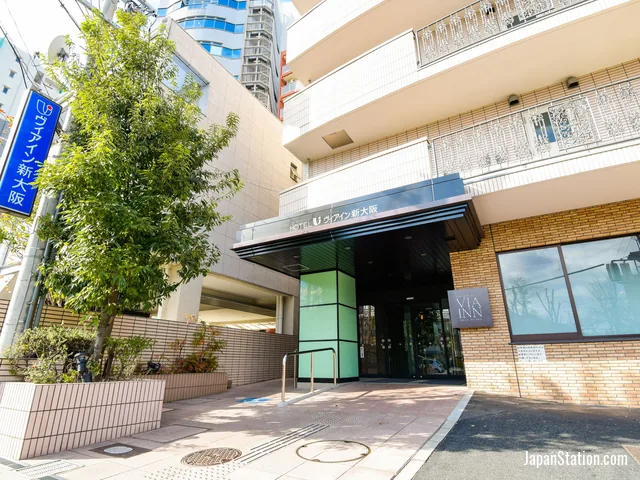
Three minutes from JR Shin-Osaka Station's East Exit, VIA INN SHIN-OSAKA keeps Shinkansen departures and Haruka airport trains close, with direct Midosuji Line service to Umeda and Namba.
Directly connected to Shin-Osaka Station's Shinkansen Central Ticket Gate, remm Shin-Osaka keeps bullet-train departures and JR or Midosuji Line transfers close.
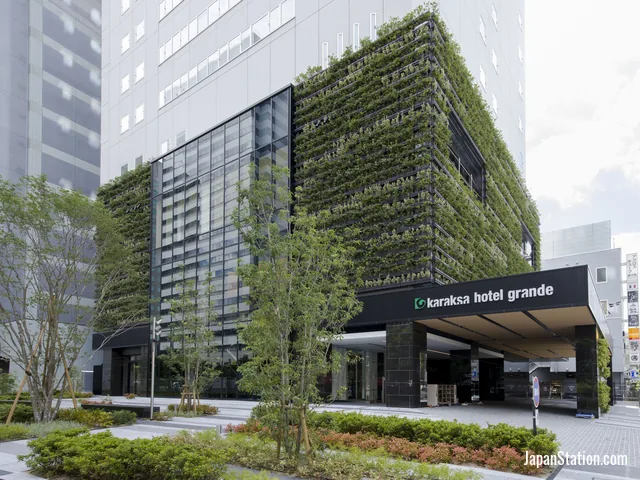
Shin-Osaka Station's Shinkansen and Midosuji Line services are about five minutes from karaksa hotel grande Shin-Osaka Tower, with direct subway trains to Umeda, Shinsaibashi, and Namba.
Related area
Use the area page for hotel context around this station.
Centered on Osaka's Shinkansen stop, Shin-Osaka Station Area simplifies bullet-train arrivals, station-side stays, and Midosuji Line trips to Umeda and Namba.