
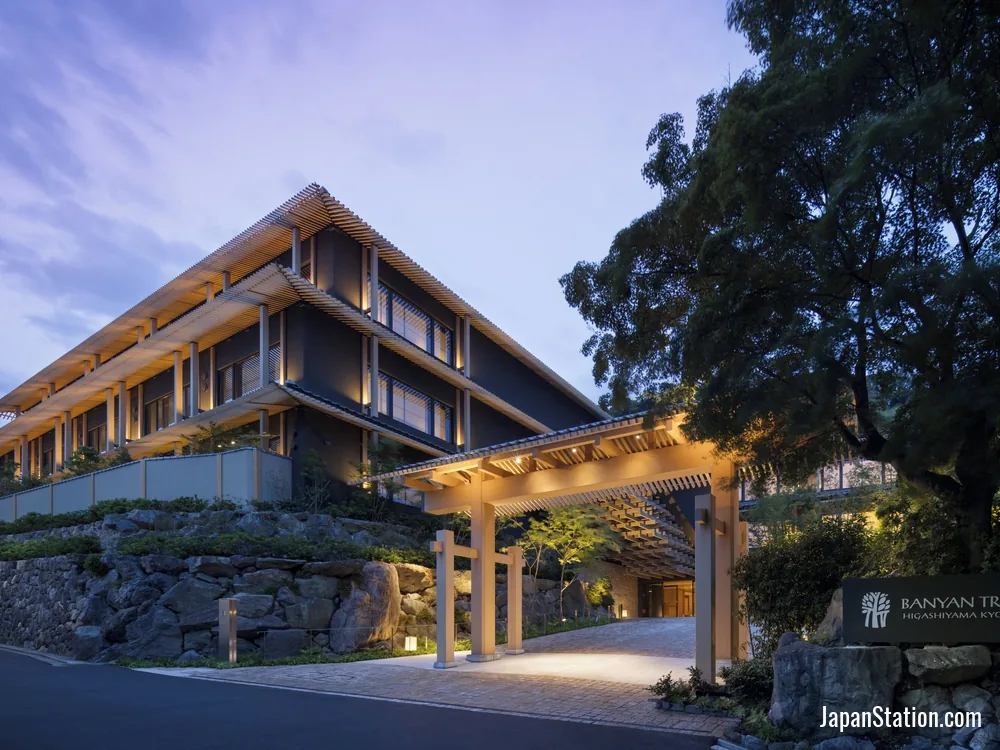


Overview
Banyan Tree Higashiyama Kyoto occupies a wooded hillside about a 12-minute walk from Kiyomizu-dera. The 52-room luxury hotel has gardens, natural hot spring baths, and a stage for Noh, a form of classical Japanese theatre.
Rooms
Rooms have tatami details, sitting areas, wooden soaking tubs, and separate walk-in showers. Entry-level Serenity rooms start at 48 square metres. Views vary by category, from the garden or street to the city.
Only eight rooms have private natural hot spring baths. For hot spring water in your own room, book an Onsen Retreat.
Facilities
The shared onsen has indoor and open-air baths. Guests who want a private bathing session without reserving an onsen room can book a spa treatment combined with a soak in the spa's own hot spring tubs. There's also a gym.
Designed by Kengo Kuma, the Bamboo Pavilion is the hotel's Noh stage. It faces a bamboo grove and hosts both traditional and contemporary performances.
Dining
Ryozen serves seasonal kaiseki, a Japanese multicourse meal, beside the Bamboo Pavilion. Breakfast and afternoon tea are also served here, while Bar Ryozen focuses on local sake.
Ryozen SEN Bettei has just eight seats at its counter. Its chef-selected dinner is available on certain evenings, so reserve ahead if you'd like to eat here.
Location and transport
Gion-Shijo Station is about a 25-minute walk from the hotel. A taxi avoids the uphill walk with luggage. From Kyoto Station, the taxi ride takes about 20 minutes, although traffic can add time.
Airport access
From Kansai International Airport, the Haruka limited express runs directly to Kyoto Station. Continue from there to the hotel by taxi.
Why stay here
The short walk to Kiyomizu-dera makes an early temple visit easy to build into the stay. You can return for breakfast and leave the afternoon open for the baths or a spa appointment.
The surrounding Kyoto-Gion area rewards unhurried walks. Browse ceramics around Kiyomizu, follow the lanes past Yasaka Pagoda, or continue into Gion for restaurants and bars.
Good to know
On-site parking is reserved for guests with disabilities. Other drivers need to use nearby public car parks.


 nearby