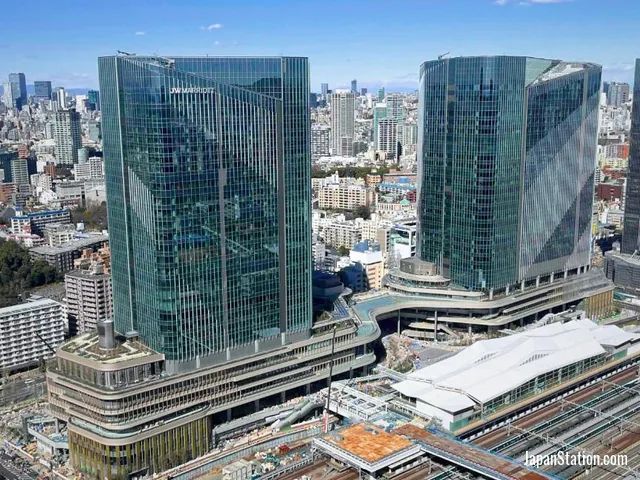
Overview
The station now has a district of its own. Centered on Takanawa Gateway Station, Takanawa Gateway City reached its grand opening on March 28, 2026, when MoN Takanawa and the wider development opened.
NEWoMan shopping and dining, convention facilities, public spaces, and JW Marriott Hotel Tokyo now give visitors reasons to spend time here instead of treating the area only as a rail stop.
What the area is known for
NEWoMan Takanawa is the district's main shopping and dining destination. Its most distinctive public space is LUFTBAUM, a planted high-rise garden more than 100 meters above ground with all-day dining and bars.
The convention center connects directly to the station. Fifteen rooms surround a main multipurpose hall of about 1,640 square meters, so a meeting or conference can take place without a cross-city journey from the hotel or JR platforms.
Main places
MoN Takanawa opened with the wider district in March 2026. Its program combines exhibitions, live performances, digital stage work, and events based on Japanese culture. A pedestrian deck connects the entrance with the station side of the development.
JW Marriott Hotel Tokyo occupies the upper floors of Linkpillar 1 South. The 200-room hotel has restaurants and a spa, and guests can reach the station, convention center, and MoN Takanawa without leaving the district.
Stations and access
Takanawa Gateway Station serves the JR Yamanote and Keihin-Tohoku lines. Tokyo Station is about eight minutes away on the Keihin-Tohoku Line, while Shibuya is about 14 minutes away on the Yamanote Line. Sengakuji Station is about two minutes on foot from the complex and adds Keikyu and Toei Asakusa Line trains.
From Haneda Airport Terminal 3, the Keikyu Airport Express reaches Sengakuji in about 15 minutes, followed by about two minutes on foot into the district. From Haneda Airport Terminal 1 or 2, an alternative route reaches Takanawa Gateway Station in about 17 minutes with a transfer to JR at Shinagawa Station.
A daily airport limousine bus runs directly between Narita Airport, Takanawa Gateway Station, and JW Marriott Hotel Tokyo. Check the current timetable before relying on it for an early flight or late arrival.
Where it fits in a trip
A convention, MoN program, or stay at JW Marriott can keep much of the day within the district. When the local plan is finished, direct JR trains continue across central Tokyo.
The tradeoff is street life. Takanawa Gateway City has planned plazas, towers, malls, and event spaces rather than the dense older streets found elsewhere in Tokyo. Compare Tokyo-Shinagawa when westbound Shinkansen travel or direct Keikyu trains to Haneda matter more.
Good to know
Takanawa Gateway Station and Shinagawa Station serve different purposes. Use the former for the new district and cross-city JR trains; use Shinagawa for the Tokaido Shinkansen, Keikyu airport services, and long-distance rail transfers.
The grand opening didn't complete every planned element. The preserved Takanawa Embankment is due to open on-site in spring 2028, although a gallery in Linkpillar 2 already introduces its railway history.