The morning market, port-era streets, and Mount Hakodate after dark give Hakodate its character, while streetcars connect the center with Goryokaku and Yunokawa.
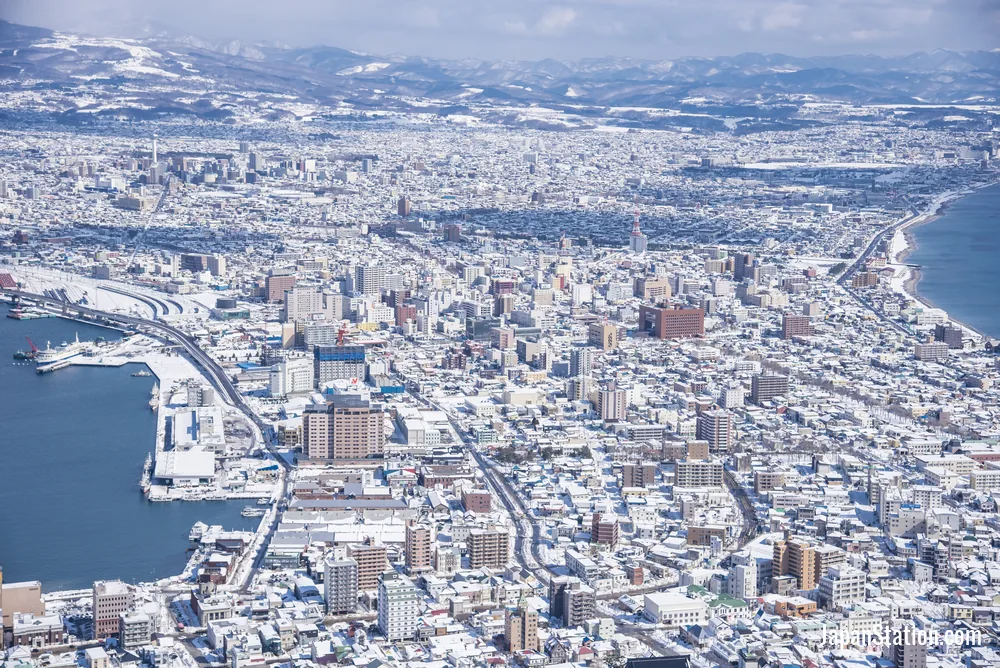
Sea wraps around central Hakodate on both sides, with Mount Hakodate rising at the southern end. From the summit, that narrow geography becomes the night view the city is known for. At street level, the old trading port shapes the center. A seafood market starts early beside the main rail hub. Farther inland, Goryokaku and Yunokawa shift the focus to history and hot springs.
Most visits divide naturally among four areas, and they aren't interchangeable. The Hakodate Station Area handles arrivals and market breakfasts. The Bay Area and Motomachi bring together harbor walks and port-era streets, while Goryokaku adds a separate historical outing. Yunokawa Onsen is farther from the center but much closer to Hakodate Airport.
Aerial view of Hakodate. Photo by ninguru/pixta.
What the city is known for
Mount Hakodate is the evening focal point. The ropeway takes about three minutes from the base to the summit, where the city's lights narrow between two stretches of dark water. Weather, strong winds, and seasonal maintenance can affect access, so check operating information before building an evening around the view.
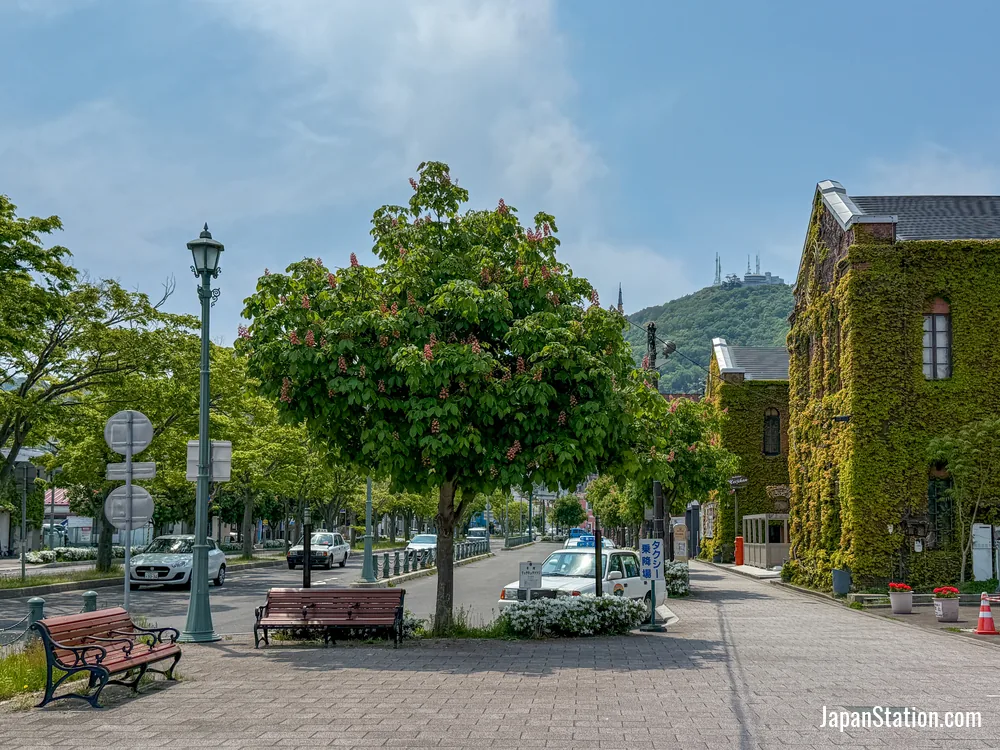
Below the mountain, Motomachi's sloping streets preserve churches and Western-style buildings from Hakodate's years as an international trading port. The neighboring Bay Area carries that history into the waterfront, where the brick warehouses built in 1909 now contain shops and restaurants. The two districts are close enough to combine in the same walking day.
Goryokaku tells a different chapter of the city. The star-shaped fort was completed in 1864 and is now a park centered on the rebuilt Hakodate Magistrate's Office. It is inland from the old port districts, so treat it as its own tram or bus outing rather than an extension of the waterfront walk.
Hakodate Morning Market is beside Hakodate Station and its market buildings open early for seafood bowls and other Hokkaido foods. Plan it for breakfast rather than late in the day.
Hakodate Hotels
Main areas
The station and morning-market side keeps transport close. Hakodate Liner arrivals and airport buses both end here, while nearby hotels take the pressure off early departures. For evening walks, the waterfront and Motomachi have more character.
Motomachi climbs the slopes below Mount Hakodate, while the Bay Area runs along the harbor below. Stay here for historic streets and waterside walks, with shops and restaurants close by for the evening. The hills are part of the experience, especially in Motomachi.
Goryokaku is a separate sightseeing district reached by tram or bus from the central areas. Yunokawa Onsen lies farther east. There, hot-spring stays and airport proximity matter more than quick access to the morning market or waterfront.
Getting around and onward travel
For the main sightseeing areas, the tram does much of the work. From Hakodate Station, streetcars serve the western stops for Motomachi and the Bay Area. The same network continues toward Goryokaku and Yunokawa, while buses cover Mount Hakodate and other visitor routes. Walking fills the gaps around the rail hub, waterfront, and hillside streets.
Hokkaido Shinkansen trains stop at Shin-Hakodate-Hokuto Station, not in central Hakodate. Hakodate Liner trains cover the final rail leg to Hakodate Station in about 15 to 22 minutes. Build that transfer into arrival and departure plans rather than treating the two stations as one place.
Hakodate Airport has direct buses to Hakodate Station and other city stops. Yunokawa Onsen is about five minutes from the airport by bus, while the tram ride between Yunokawa and Hakodate Station takes about 30 minutes. That difference matters when choosing between a city-center hotel and an onsen stay.
Where to stay and where to go next
Stay near Hakodate Station when a trip mixes a Shinkansen transfer, a flight, or an early market breakfast. Look toward the Bay Area or Motomachi when harbor walks and historic streets matter more than the quickest departure. For an onsen night before a flight, Yunokawa keeps the airport close.
Onuma Quasi-National Park is about 30 minutes away by train and offers a nature-focused side trip beyond the city. Limited express trains continue north toward Sapporo, while the Hokkaido Shinkansen carries rail trips south after the Hakodate Liner transfer.
Good to know
Hakodate Station handles city transport, while Shin-Hakodate-Hokuto Station handles Shinkansen trains. They are connected by the Hakodate Liner but are not interchangeable.
JR Goryokaku Station is not the sightseeing stop for Goryokaku Park. Continue to Hakodate Station, then take a tram or shuttle bus to the park area.
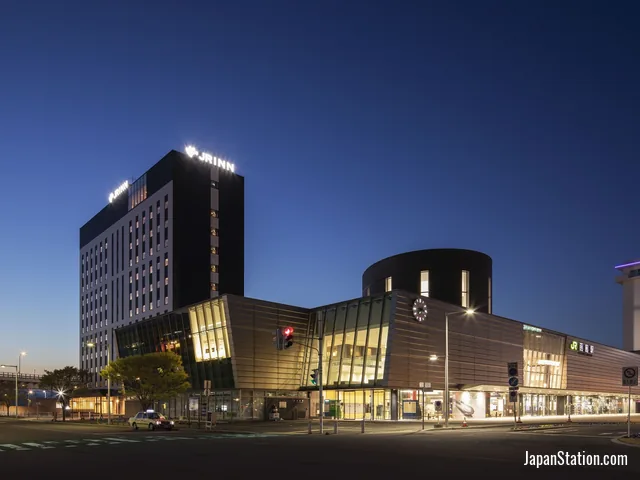
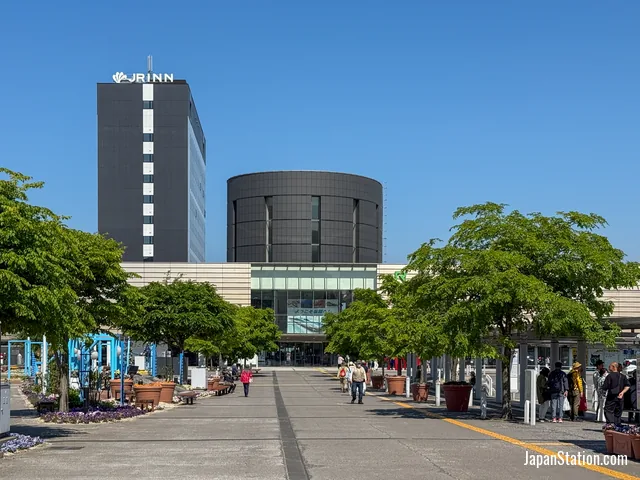
JR Inn Hakodate connects indoors with Hakodate Station, while the Morning Market is opposite and its top-floor bath looks over the port and station tracks.
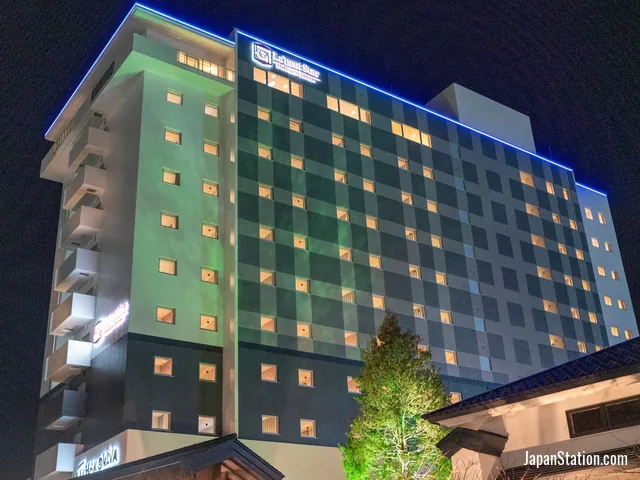
La'gent Stay Hakodate Ekimae is a one-minute walk from JR Hakodate Station, offering public baths, a sauna, PREGALO breakfast, Hakoviva shops nearby, and easy access to the airport shuttle.
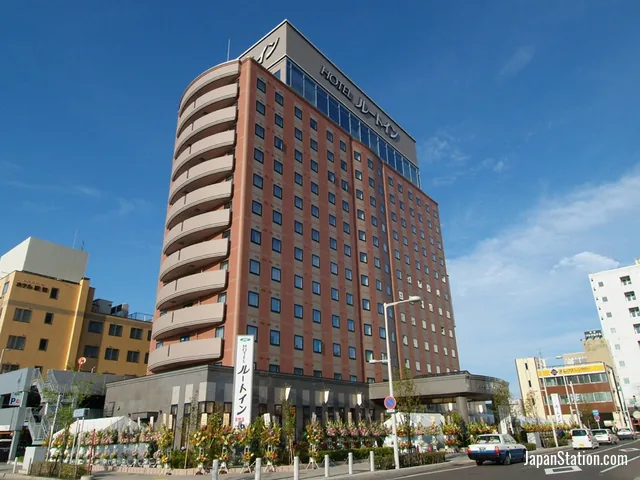
For early trains and airport transfers, Route-Inn Grantia Hakodate Ekimae is beside Hakodate Station's rotary, with a top-floor natural hot-spring bath, buffet breakfast, laundry, and nearby trams.
Where to stay in this city
Compare practical stay areas by transport usefulness rather than by generic sightseeing rank.
Around Hakodate Station, this compact hotel district brings the morning market, streetcars, airport buses, and city-side rail connections within easy reach.
Important stations
Stations that shape hotel choice and movement around the city.