Overview
Set between the Seto Inland Sea and the mountains of western Shikoku, Matsuyama is compact enough for a short stay but varied enough that where you book matters. Dogo Onsen gives the city its hot-spring character, Matsuyama Castle rises above the center, and trams make it easy to move between the main visitor areas.
The area choice is straightforward. Stay in Dogo if baths and onsen-town evenings are the focus. Choose Okaido if you want the castle, shopping arcades, and restaurants close by. Stay near Matsuyama City Station when airport buses, tourist-port buses, and Iyotetsu connections are the priority.
What the city is known for
Dogo Onsen is Matsuyama's signature attraction, with public bathhouses and a shopping arcade that make it feel like a full district rather than a single stop. It is the part of the city to prioritize when you want the trip to revolve around hot springs.
Matsuyama Castle gives the city center its shape. The castle stands on Mount Katsuyama above the shopping streets, with views toward the Seto Inland Sea and the surrounding mountains.
Matsuyama also has literary and pilgrimage associations, along with a food culture rooted in Ehime. Citrus, Seto Inland Sea seafood, and local sweets give meals in the center and Dogo a clear sense of place without requiring a food-focused itinerary.
Main areas
Dogo Onsen suits travelers who want baths, ryokan-style evenings, and the atmosphere of an onsen town. It is linked to the center by tram, but it feels separate from the castle and shopping side of the city.
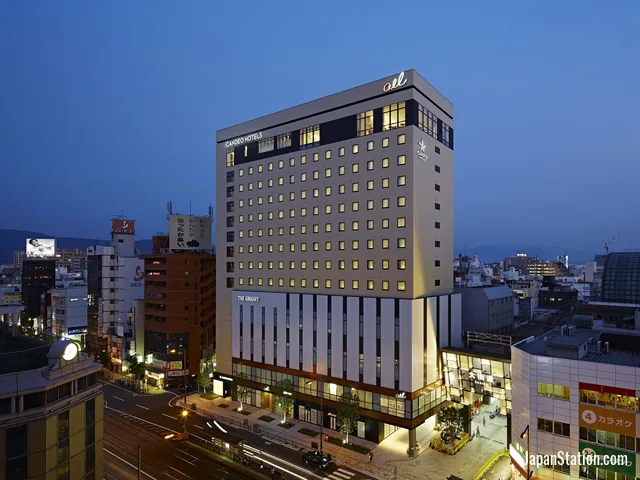
Matsuyama Okaido is the most balanced central area for sightseeing and evenings out. Around Okaido Station, covered arcades and restaurants handle the after-dark side of the trip, while trams and the airport bus keep the area well connected.
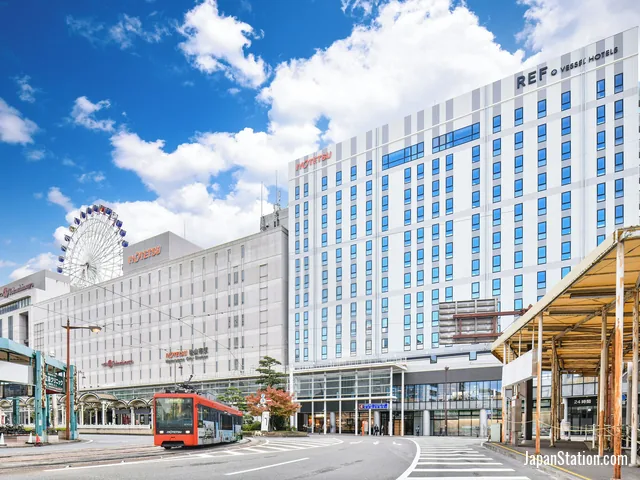
Matsuyama City Station Area works best when transport comes first. Matsuyama City Station is the Iyotetsu hub, keeping the airport limousine bus close to local rail, trams, and city buses.
Getting around and onward travel
Trams are central to getting around Matsuyama. They provide the simplest link between the JR side, downtown, and Dogo Onsen, so most first-time sightseeing does not require a car.
Airport buses stop at several city points, including Okaido and Dogo Onsen. Tourist-port buses also run into the city, which makes your hotel area more important if you are arriving or leaving by ferry.
JR Matsuyama Station and Matsuyama City Station are separate places with different roles. Use JR Matsuyama Station for intercity rail. Use Matsuyama City Station for Iyotetsu and city-side transfers.
Where to stay and where to go next
Dogo is the atmospheric onsen choice, Okaido is best for sightseeing and dining, and Matsuyama City Station is the transfer-focused option. For most short stays, choosing among those three areas is more important than searching for a single universal center.
From Matsuyama, onward plans may point toward the airport, the tourist port, or rail travel across Shikoku. Start with your next departure, then choose the area that makes that move easiest.