Overview
Arrival days are when this district earns its keep. Around Kyoto Station, long-distance rail meets city transport, station shopping, and a broad choice of hotels. Staying nearby removes a local transfer after Shinkansen or Haruka journeys and keeps luggage close to storage, delivery counters, taxis, and hotel check-in.
Kyoto's historic districts are elsewhere. Gion, Higashiyama, and many celebrated temples require another ride. That distance is the main tradeoff, but first nights, last nights, and rail day trips become much easier.
What the area is known for
The Central and Hachijo exits give the district two distinct sides. The Central Exit opens north toward Kyoto Tower, the main city-bus stands, and streets leading to Higashi Honganji. The Hachijo side is closer to the Shinkansen and Kintetsu gates, with airport buses, highway buses, and many hotels nearby. Knowing which side you need can save an unnecessary walk through the building.
Inside and below the rail complex, JR Kyoto Isetan and Kyoto Porta bring shopping and dining into the station itself. Their dining floors and food counters are handy for a quick meal, groceries, or gifts after arrival. The district is more functional than atmospheric, but that's genuinely helpful after a late arrival.
Main places
Kyoto Tower is the clearest landmark north of the station. Higashi Honganji and Nishi Hongwanji bring major temple architecture within reach of the Central Exit, while Toji lies southwest along a walking route from the Hachijo Exit. Together, they give the district more sightseeing depth than its modern streets first suggest.
One JR stop west, Kyoto-Umekoji brings together Umekoji Park, Kyoto Aquarium, and Kyoto Railway Museum. The park and its two major attractions can fill a family day without crossing the city, though Umekoji feels like a separate park-and-museum district rather than part of the station frontage.
Stations and access
The Tokaido Shinkansen connects Kyoto Station with Tokyo, Nagoya, and Shin-Osaka. JR local lines cover several useful visitor routes: the Nara Line serves Fushimi Inari and Uji, while the Sagano Line begins trips toward Umekoji and Arashiyama.
The Kyoto Municipal Subway Karasuma Line runs north through Gojo, Shijo, and Karasuma Oike, providing the simplest rail route into central Kyoto. Kintetsu trains serve routes toward Nara. For flights, the Haruka limited express runs directly between Kansai International Airport and Kyoto Station.
Where it fits in a trip
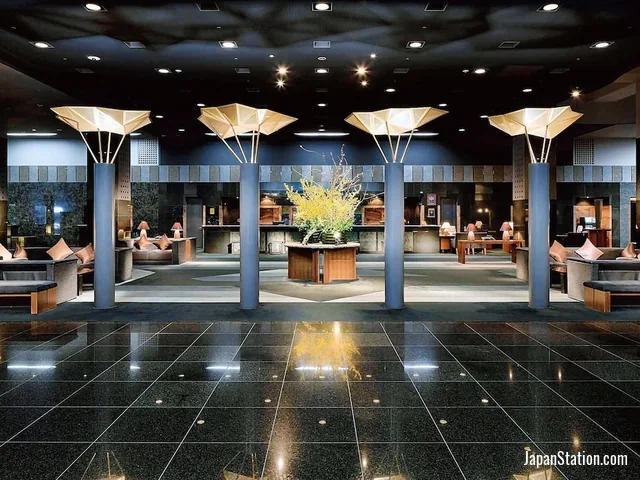
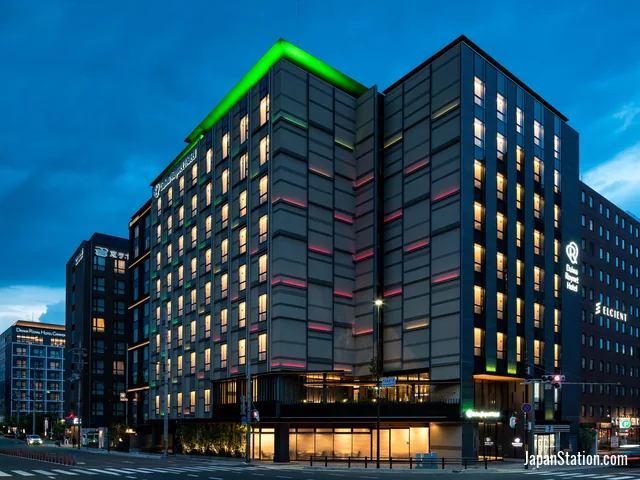
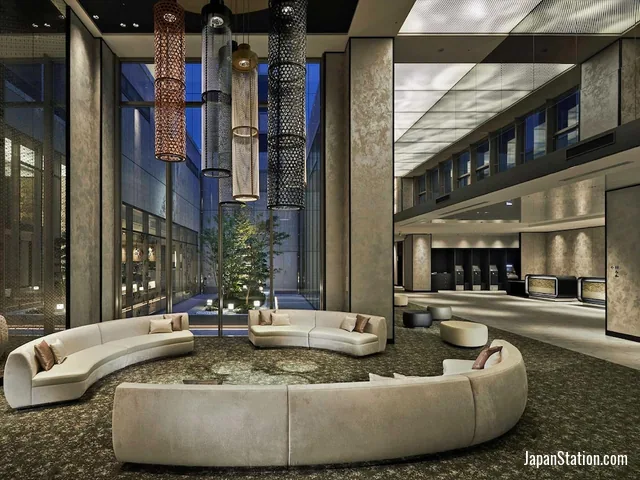
A room close to the station matters most when the schedule begins early, ends late, or includes several rail outings. Hotel Granvia Kyoto is inside the station building, while THE THOUSAND KYOTO is close to the Central Gate. Both spare guests a separate city transfer after a long-distance arrival.
For evening walks, traditional streets, and doorstep access to east-side sights, Kyoto-Gion is a better match. The advantage here is timing and logistics, not old-town atmosphere.
Good to know
Kyoto Station is large. Check your hotel exit and meeting point before arrival, especially when carrying luggage.
City buses leave from several stops around the station, and traffic can turn a simple-looking route into a slow one. Use the subway or JR when either serves your destination directly, and check the bus stop number before joining a line. If you arrive before check-in, station-area delivery and storage services can keep your suitcase off crowded local transport.